5 Signs Your Pool Needs a Repair (and the Point Where It Becomes a Renovation)
A cracked tile and a failing pump are not the same problem, and the difference changes both the price and the timeline.
September 1, 2026 · 4 min read
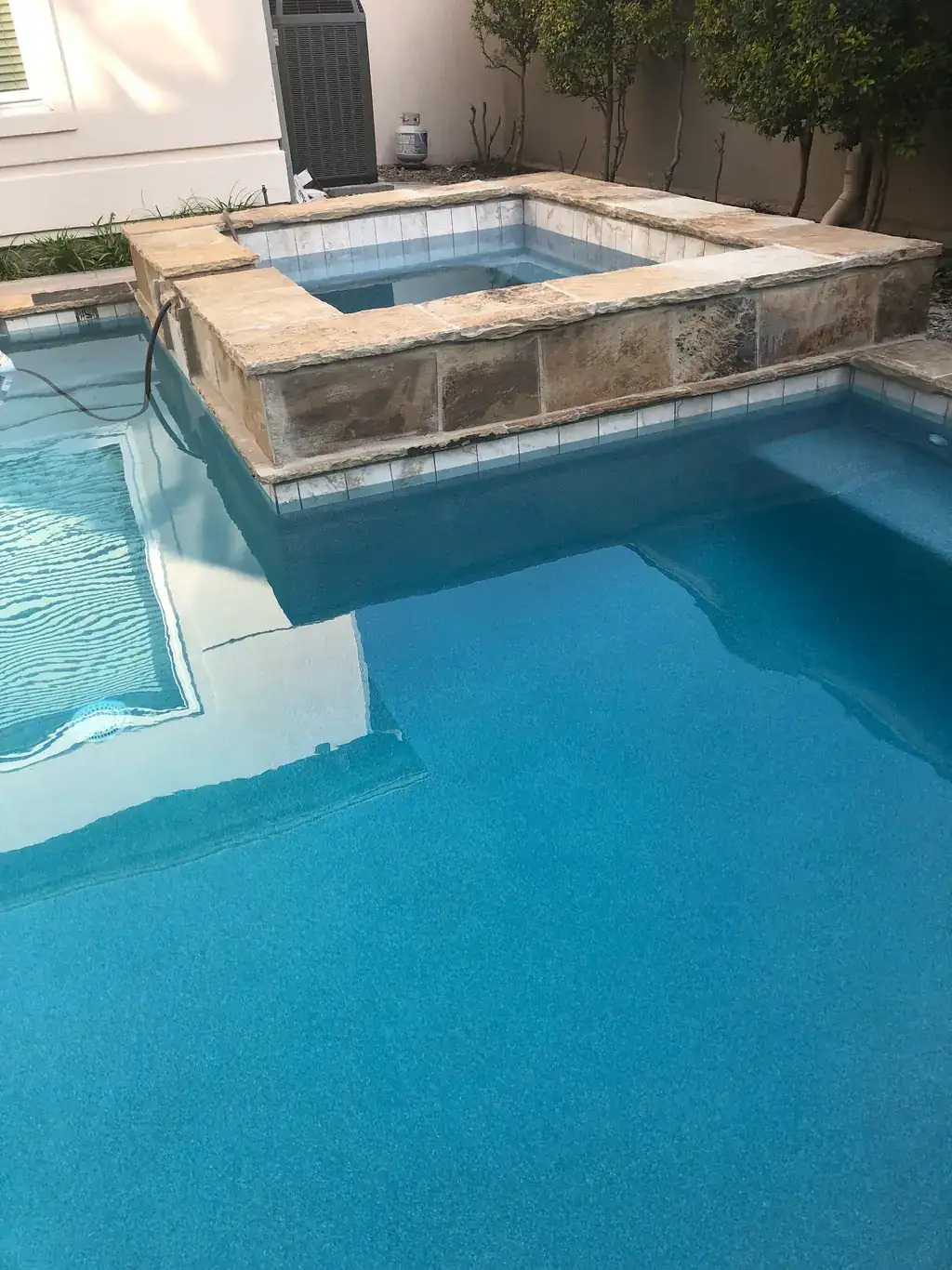
A cracked tile is not the same problem as a pool that has lost its shape. One is a repair. The other is a renovation, sometimes called a remodel. Getting that distinction right before you call anyone matters, because the cost and the timeline are worlds apart, and a lot of Carrollton homeowners end up paying for the wrong fix because nobody explained the difference first.
Where the line actually sits
A repair fixes one broken part of a working system, a pump that won't prime, a heater that won't fire, a filter that's clogged, a small crack that needs sealing. Most repairs take one to three days. A renovation redoes the pool's surface and often its systems at the same time, new plaster, new tile, new coping, sometimes a new deck. That takes longer, usually three to ten weeks depending on the weather and the scope of work, and it costs more. Plastering alone runs $6,000 to $16,000. A complete remodel, plaster through tile through coping through deck, runs $30,000 to $90,000, depending on the plaster you choose, the size of the pool, and how much of it you're touching. Neither number means anything until you know which one your pool actually needs.
Five signs you're dealing with a leak
- Your pool loses more than a quarter inch of water a day, more than evaporation explains
- Cracks show up in the pool's surface or the deck around it
- Air bubbles come up out of the return lines
- The grass around the pool feels soft or soggy when the rest of the yard doesn't
- Your water bill jumps and you can't point to why
Any one of these on its own is worth a call. Two or three together usually means the leak has been running a while. A proper leak check looks at the whole system, plumbing, shell, fittings, and equipment, then uses pressure testing and dye testing to find exactly where the water is going, with non-invasive methods used first so nobody's digging up your yard unless it's actually necessary.
Signs the surface itself has had enough
Old pools tend to fail in the same three places: plaster, tile, and coping. Rough or chalky plaster, tile that's faded or popping off the wall, coping that's cracked or shifted, these are wear signs rather than emergencies, but they only get worse. A few tiles or one section of coping is usually a repair. Plaster gone rough, chipped, or stained across the whole shell is resurfacing, and that's the point a repair budget turns into a renovation budget.
Equipment problems that are usually just repairs
Pumps, motors, heaters, filters, salt cell generators, and chlorinators fail on their own schedule and mostly don't mean anything is wrong with the pool itself. The right approach is to diagnose the actual cause before quoting anything rather than patching a symptom and sending a bill, repairs that last, not just patch jobs, applies the same to a motor that needs replacing as it does to a chlorinator that's stopped reading correctly. Hayward and Pentair replacement parts, motors, and skimmer lids are stocked at the Hebron Parkway store, so a diagnosis doesn't always mean a long wait for a part to arrive.
When a crack means something structural
Not every crack is cosmetic. Structural cracks in the shell get sealed with epoxy, foam, staples, or hydraulic cement, and which method is right depends on what's actually causing the crack. Diagnosing the cause always comes before picking a fix. A crack that keeps coming back after being patched is telling you the underlying cause was never addressed, and that's usually the moment a repair conversation turns into a renovation conversation.
Sometimes it isn't a repair at all
Not every problem that looks like a repair actually is one. Cloudy water, mild staining, or a pool that just seems off is often a water chemistry issue rather than a mechanical one. The Hebron Parkway store offers free in-store water testing, and cleaning plans range from a one-time cleaning to a full pool drain and cleaning to ongoing weekly cleaning and maintenance, either with your own chemicals or professional-grade products charged by the pound. It's worth ruling this out before assuming a piece of equipment is failing.
When to bring in a full inspection
If you're weighing a repair against a renovation and can't tell which you're looking at, a professional inspection settles it. That means pressure testing, electrical testing, and a hidden-leak assessment, plus a check of the safety basics: proper gating, drain covers, and electrical bonding. It's the same inspection homeowners get before buying a house with a pool, done instead on a pool you already own, and it's the fastest way to get a real answer instead of guessing.
If you're not sure which one you're looking at
That's what a professional inspection is for. A-Affordable Pool & Spa has been doing this in Carrollton since 1991, and TDLR license #433 means the technicians are trained and accountable to the state, not just to the company. Call (972) 416-4487 and get an honest read on whether it's a repair, a renovation, or somewhere in between, with real numbers before you decide anything, in English or Spanish.
A Affordable Pool & Spa Svc Inc., (972) 416-4487
Call (972) 416-4487More articles
What Pool Resurfacing Actually Costs in North Texas
Plastering runs $6,000 to $16,000 and a full remodel runs $30,000 to $90,000, and here's exactly what moves a job between them.
Why Structural Integrity Matters More Than the Finish
A new surface over a shell that's still moving doesn't last, no matter how good the plaster looks on day one.